ACETYLCHOLINE RECEPTOR (ACHR) BINDING ANTIBODY
Special Instruction : Avoid general anaesthetic or muscle relaxant drugs 24 hours prior to sampling. This assay should not be requested for patients who have recently received radio-isotopes therapeutically or diagnostically due to potential assay interference. Clinical history is required.
Parameters covered : 1
Report Frequency : Sample Mon 9 am; Report After 3 days
ACETYLCHOLINE RECEPTOR ANTIBODY TEST- Overview
What is ACETYLCHOLINE RECEPTOR ANTIBODY TEST ?
The Acetylcholine Receptor (AChR) Antibody Test is a blood test used to detect antibodies that target acetylcholine receptors at the connection between nerves and muscles. These antibodies are commonly associated with myasthenia gravis, an autoimmune condition that can cause muscle weakness. The test may help doctors evaluate symptoms such as drooping eyelids, double vision, difficulty swallowing, speaking, or weakness that worsens with activity.
Parameters
Doctor Information
Pre-test Information
No special preparation required
Report Delivery
Sample Mon 9 am; Report After 3 days
Category
Autoimmune & Immunology Tests
Stability Room
6 hrs
Stability Refrigerated
1 week
Stability Frozen
1 week
Method
ELISA
Specimen
2 mL (1 mL min.) Serum from 1 SST. Ship refrigerated or frozen.
Usage
Myasthenia gravis (MG) is characterised by muscle weakness & easy fatigability most commonly due to autoantibody mediated loss of functional acetylcholine receptors in the postsynaptic membrane of skeletal muscle. ACHR antibodies are not found in Congenital MG. This assay is used to diagnose Acquired forms of MG (90% positive), for detecting subclinical MG in recipients of D-penicillamine, Thymoma without clinical evidence of MG & Graft versus Host disease. It may also be positive in Lambert-Eaton myasthenic syndrome, Autoimmune liver disease & Paraneoplastic autoimmune neurological disorders.
Acetylcholine Receptor Antibody Test in Pitampura & Rohini for Myasthenia Gravis
Not all weaknesses of the muscles have similar causes. In certain situations, the weakness may get worsened through physical activity or may only affect specific muscles that control vision, talking, eating, and movement. With such symptoms, a patient is examined to see if there is any problem in nerve-muscle communication.
For such an evaluation, a doctor may order an acetylcholine receptor antibody test. This test aims to identify antibodies affecting acetylcholine receptors responsible for transmitting nerve impulses to the muscles. It gives a lot of helpful information while evaluating such diseases as myasthenia gravis.
At BIO Diagnostics, an Acetylcholine Receptor Antibody Blood Test in Pitampura is conducted through the analysis of blood samples. The results of the test are usually evaluated in the context of the symptoms, medical history, physical examination, and other tests conducted by the physician on the patient.
What is an Acetylcholine Receptor Antibody Test?
The function of acetylcholine is for the transmission of nerve impulses to the muscle cells. The impulse is triggered at the nerves, after which the secretion of acetylcholine occurs, which binds to the receptors in the muscle cells. This will trigger a response by the muscle, resulting in muscle contraction.
In certain autoimmunities, the body produces antibodies that will attack these receptors. They are called AChR antibodies.
AChR antibody testing is used to find out whether there are such antibodies in the blood. The doctor may suggest this test in case a patient has the symptoms of myasthenia gravis or another disorder in which there are communication problems between nerves and muscles.
When performing this test, a doctor should know that the test shows not muscle strength, but only antibodies that prevent communication between muscles and nerves.
What is Myasthenia Gravis?
Myasthenia gravis is a disease of transmission at the nerve–muscle junction due to an autoimmune process. This condition can cause weakening of voluntary muscles that gets worse when muscles are engaged in repeated movements but can be relieved by rest.
The condition can affect different parts of the body. In some cases, eye problems will be the initial symptoms. Other patients may experience weakness in the face, speech, mouth, throat, neck, arms, or legs.
Some typical symptoms may be as follows:
- Lowered eyelids or double vision
- Chewing and swallowing difficulties
- Muscle movement worsens with physical activities
- Speech changes
- Neck, arm, or leg weakness
- Breathing difficulties for some people
This, however, does not imply that all people showing such symptoms suffer from MG, as there are several other illnesses with similar symptoms.
When May an AChR Antibody Blood Test Be Recommended?
An acetylcholine receptor antibody blood test can be recommended by the physician to a patient depending upon the symptom profile that indicates myasthenia gravis or any other disease related to the neuromuscular junction.
The test may be recommended if the patient experiences muscle weakness without any known cause, especially when the symptom profile points towards a nerve and muscle communication disorder.
Acetylcholine Receptor Antibody Blood Test in Pitampura can also be recommended as part of the neurology study in case the first diagnosis is not successful.
The necessity of conducting this test is determined according to the symptoms of the patient.
How Does the Test Help in Myasthenia Gravis Evaluation?
The Acetylcholine Receptor Antibody Test in Rohini at BIO Diagnostics can provide evidence of AChR antibodies in a person’s blood. When the result is positive and the clinical features are consistent, it may support the evaluation of myasthenia gravis.
However, laboratory testing is only one part of the diagnosis. A healthcare professional may also consider:
- The pattern and duration of muscle weakness
- Neurological examination findings
- Medical and medication history
- Other antibody investigations
- Nerve and muscle studies, when required
These two approaches help in understanding the test result in the appropriate clinical context.
How are Acetylcholine Receptor Antibodies Results interpreted?
Based on which particular lab test was performed, the report may present the result based on antibody values and reference range established by the laboratory.
Acetylcholine receptor antibody levels should always be interpreted according to the reference information provided on the report. A result outside the expected range does not automatically provide a complete diagnosis.
This is due to the patient’s symptoms, as well as other abnormalities.
What does a Positive Result mean?
It indicates the presence of antibodies in the body. This could further support myasthenia gravis.
However, the result should not be viewed independently. A healthcare professional will consider the antibody result alongside the patient’s neurological symptoms and examination.
It is also important to understand that laboratory reports can use different reference ranges and testing methods. Your report should therefore be reviewed using the interpretation provided by the testing laboratory and your healthcare provider.
What does a Negative Result Mean?
A negative test for antibodies to AChR only implies that the antibodies which are detected by that particular test have not yet been detected.
It does not in any way exclude the possibility of suffering from myasthenia gravis. Some people with clinical features of the condition may require additional evaluation if the initial antibody test is negative.
Depending on the symptoms, a healthcare professional may consider other antibody tests or neurological investigations. The next step should be determined by the whole clinical profile and not only by the blood test result.
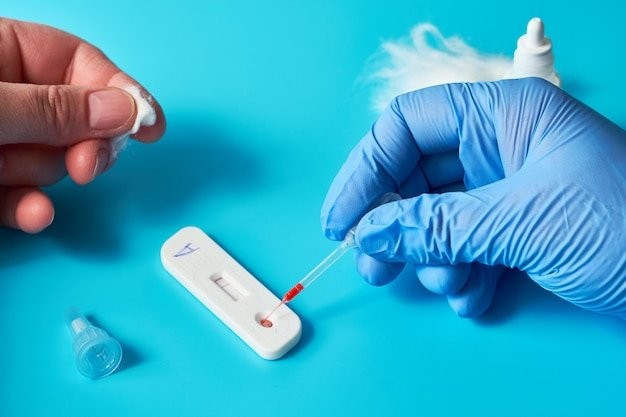
How is the Acetylcholine Receptor Antibody Test performed?
The Acetylcholine Receptor Antibody Test in Pitampura at BIO Diagnostics is conducted through a blood sample. The test sample is taken by an expert and then sent to the laboratory for further analysis.
This procedure consists of the following steps:
- Test registration and verification
- Blood sample collection
- Laboratory analysis for relevant antibodies
- Reporting of the test result
- Clinical interpretation by the healthcare provider
The test itself is a routine blood collection procedure. Any preparation requirements should be confirmed with the laboratory, particularly if other investigations have been prescribed along with the AChR antibody test.
If any other type of investigations needed for the presence of neurological symptoms, a medical practitioner can suggest conducting tests like the Meningoencephalitis CSF Panel in Pitampura, depending on the suspected cause.
Do You Need to Prepare for the Test?
There is no special preparation required for the test in case of an AChR antibody test in blood. However, requirements can vary depending on the laboratory and whether multiple blood tests are being performed together.
Before sample collection:
- Follow the instructions provided by the laboratory.
- Tell your healthcare provider about medicines or ongoing treatment.
- Carry previous relevant reports if the test is being performed as part of an ongoing evaluation.
Do not discontinue or modify the medication regimen unless advised by your healthcare provider.
Why Choose Reliable Laboratory Testing?
When a blood test is used to assess the nervous system, there needs to be an accurate laboratory examination and reporting of the same. The process should be reliable.
At BIO Diagnostic Lab, patients can enquire about Acetylcholine Receptor Antibody Test in Rohini, Pitampura and nearby areas. The laboratory also provides testing for different health concerns, including infectious conditions such as influenza, for which an H1N1 Influenza Test in Pitampura may be advised when clinically appropriate.
Book Your AChR Antibody Test in Pitampura or Rohini
In case your doctor suggests an Acetylcholine Receptor Antibody Blood Test in Pitampura, having the test done at a reliable lab will be very helpful during your treatment process. BIO Diagnostics Lab is a diagnostic center that offers various tests for patients living in Pitampura, Rohini, and the neighboring areas.
For more details regarding the Acetylcholine Receptor Antibody Test in Pitampura, Acetylcholine Receptor Antibody Blood Test in Rohini, or any other specific conditions, contact us right away! We are always ready to assist.

